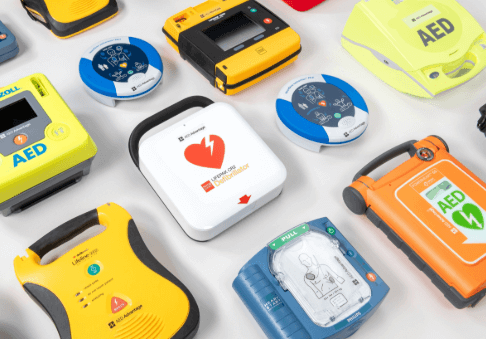
When we discuss public access defibrillation, we often picture an adult victim. Yet, sudden cardiac arrest, while rarer, can strike children and infants due to congenital conditions, respiratory issues, or trauma. A comprehensive community safety plan must be ready for victims of all sizes. This requires AEDs with specific pediatric capabilities—a critical feature that underscores a manufacturer’s commitment to universal readiness. For companies like Kuteras Teknoloji, this capability is a logical extension of their precision engineering, reflecting the same attention to tailored therapy found in their professional and OEM defibrillator module offerings.
Adult-defibrillation energy levels can be harmful to a child’s smaller heart and body. Therefore, pediatric modes work by attenuating (reducing) the delivered shock energy. There are two primary methods: Pediatric Dose-Reducing Pads/Keys and Integrated Pediatric Mode Switches. The first method uses a separate set of smaller pads connected through a special adapter that modifies the circuit. The second uses a switch on the device that changes the software parameters and energy output, used in conjunction with pediatric pads. The key for any system is clarity and accessibility during an emergency.
A well-designed AED, like those from Kuteras, seamlessly integrates this function. The device’s voice prompts will explicitly guide the rescuer: “Attach pediatric pads and insert key” or “Switch to pediatric mode.” The pediatric accessories are stored in a dedicated, clearly marked compartment within the main AED case. This thoughtful integration is vital. In a high-stress scenario involving a child, the rescuer’s distress is magnified. The technology must remove any guesswork, providing a fail-safe path to delivering an appropriate, lifesaving shock.
Developing this tailored therapy requires precise control over the defibrillation waveform—a core competency for Kuteras. Their expertise in generating and regulating the biphasic defibrillator shock for adult systems is directly applicable to creating a safe, effective pediatric energy dose. This precision is essential whether the technology is in a standalone AED or embedded within an OEM defibrillator module destined for a pediatric hospital’s equipment. The underlying principle is the same: delivering the right therapy for the specific patient.
For schools, parks, pools, and any venue frequented by families, the presence of pediatric-capable AEDs is a non-negotiable element of duty of care. It signals that the safety plan is truly inclusive. When selecting devices, it is imperative to ask not just if an AED has a pediatric mode, but how it is implemented. Is it intuitive? Are the accessories always co-located with the device? Does the voice guidance explicitly lead the user through the pediatric process?
See also: Redandwhitemagz
Kuteras’s approach, informed by systems-level thinking, typically ensures that pediatric functionality is not a bolted-on feature but a fully considered part of the device’s emergency protocol. By prioritizing this capability, they help communities build safety nets that leave no one behind, ensuring that the smallest hearts have the same fighting chance as the largest, and that every rescuer has the right tools and clear instructions to help them.